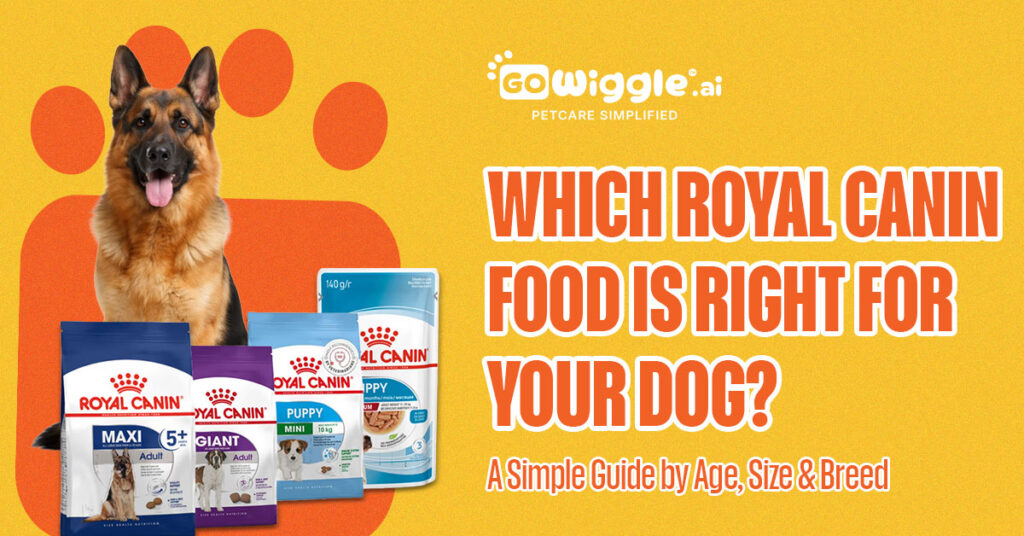
Walk into the dog food section or search for Royal Canin Food online and you will quickly realise there isn’t just one formula for every dog. There are options for puppies, adults, different breed sizes and even specific breeds such as Shih Tzus.
That variety exists because a small-breed puppy doesn’t have the same nutritional needs as a growing Labrador, and an adult Shih Tzu doesn’t necessarily need the same food it ate as a puppy.
So, how do you choose the best dog food for your dog?
A useful starting point is surprisingly simple: look at their age, expected adult size and breed.
Why Does Your Dog’s Size Matter?
Royal Canin categorises dogs by expected adult weight because size can influence growth rate, energy requirements and nutritional needs.
X-Small/Mini dogs (1–10 kg) generally have relatively high energy needs for their size. Their smaller jaws and teeth can also influence kibble design.
Medium dogs (11–25 kg) require nutrition designed around their size and active everyday lifestyle.
Large/Maxi dogs (26–44 kg) place greater loads on their bones and joints, making controlled growth particularly important during puppyhood.
Giant dogs (45 kg and above) have a long growth period and require carefully managed nutrition as their skeleton develops.
This is why knowing what size your puppy is expected to reach as an adult is important when choosing their food.
Age Matters Just as Much as Size
Your dog’s nutritional requirements change throughout life.
Puppies need nutrition that supports growth and development. Once adulthood begins, the focus shifts toward maintaining healthy body condition and supporting everyday health. Senior dogs may have different nutritional requirements again as their activity, mobility and physiology change.
Even the definition of “puppy” can vary depending on a dog’s expected adult size because different dogs mature at different rates.
A puppy feeding guide, therefore, shouldn’t be based only on how many months old your puppy is. Their breed, expected adult weight and current growth stage matter too.
Let’s look at some of the Royal Canin options available at GoWiggle.ai and who they’re designed for.
Royal Canin Mini Starter: For Small-Breed Mothers & Young Puppies
Royal Canin Mini Starter Mother & Babydog is designed for small-breed mothers and their puppies during the early stage of life, including puppies up to around two months old.
This makes it relevant during the transition around weaning, when a young puppy is moving toward solid food.
If you’re bringing home or caring for a very young small-breed puppy, don’t automatically reach for a general adult small-breed formula. Check the puppy’s age and life stage first.
Royal Canin Maxi Starter: For Large-Breed Mothers & Young Puppies
Have a large-breed mother or a puppy expected to grow to 26–44 kg?
Royal Canin Maxi Starter Mother & Babydog is designed for large-breed mothers during late gestation and lactation and for puppies during the weaning period up to two months.
The formula contains 30% protein and 22% fat, along with highly digestible proteins.
The distinction between Mini Starter and Maxi Starter is important: two puppies may be the same age but have very different nutritional requirements because of the size they’re expected to reach.
Royal Canin Maxi Puppy: For Growing Large-Breed Puppies
After the very early puppy stage comes the next question: what should you feed a growing large-breed puppy?
Royal Canin Maxi Puppy is intended for large-breed puppies from approximately 2 to 15 months.
Think Labradors, Golden Retrievers, German Shepherds and other dogs that will grow into the large-size category.
Large puppies have considerable growing to do, so choosing food formulated for their particular growth stage is more appropriate than simply picking any product labelled “puppy food.”
Maxi Puppy is also available in dry and gravy formats, giving pet parents different feeding options.
Royal Canin Shih Tzu Puppy vs Adult: Choose by Age
Sometimes size isn’t the only consideration. Breed-specific characteristics matter too.
Royal Canin produces breed-specific nutrition with factors such as jaw structure, kibble shape and particular nutritional requirements in mind.
For a Shih Tzu, the first question is age.
Royal Canin Shih Tzu Puppy is formulated for Shih Tzu puppies up to 10 months old. It contains 25% protein and 14% fat and is designed to support areas including developing immunity, digestion and coat health.
Once your Shih Tzu is over 10 months, Royal Canin Shih Tzu Adult becomes the age-appropriate option. It provides 24% protein, 20% fat and 3% fibre, with nutrition designed to support the breed’s long, dense coat and joint health.
So if you’re deciding between the two, don’t choose based on the packaging you recognise. Check your Shih Tzu’s age first.
Royal Canin Mini Adult: For Adult Small-Breed Dogs
If your small-breed dog has moved beyond puppyhood, Royal Canin Mini Adult is designed for adult dogs in the Mini size category.
This can include small breeds such as Pomeranians, Pugs and other adult dogs within the relevant size range.
This distinction is particularly useful for pet parents who continue feeding puppy food after their dog has reached adulthood. Nutritional requirements change as growth ends, so your dog’s food should change with their life stage too.
What About Other Breeds?
Breed-specific nutrition can become useful when a breed has particular physical or nutritional considerations.
For example, Royal Canin develops specific formulas for breeds including Labradors, German Shepherds and Pugs. These can consider characteristics such as appetite and weight management, digestive sensitivity, joint support or even the shape of the dog’s jaw.
Not every dog necessarily needs a breed-specific product, however. Size- and life-stage-based formulas provide another way of finding appropriate nutrition.
When you buy Royal Canin food online, read the complete product name rather than choosing purely by brand. “Starter,” “Puppy,” “Adult,” “Mini,” “Maxi” and the breed name all tell you something about who the food is intended for.
How Much Royal Canin Should You Feed Your Dog?
Choosing the correct formula is only half the job. Portion size matters too.
Daily feeding amounts can depend on your dog’s current weight, age, activity and the specific formula being fed. Check the feeding table provided on the product packaging and measure portions rather than estimating them by eye.
Royal Canin also provides feeding guidance for its products. If you’re unsure about the appropriate quantity particularly for a growing puppy, underweight dog, overweight dog or a dog with health concerns, your veterinarian should help determine the feeding plan.
Don’t simply copy another dog’s portion because they’re the same breed. Individual requirements can differ.
Quick Royal Canin Dog Food Guide
| Your Dog | Life Stage | Royal Canin Option |
| Small-breed mother & puppy | Puppy up to ~2 months | Mini Starter |
| Large-breed mother & puppy | Puppy up to ~2 months | Maxi Starter |
| Large-breed puppy | 2–15 months | Maxi Puppy |
| Shih Tzu | Up to 10 months | Shih Tzu Puppy |
| Shih Tzu | Over 10 months | Shih Tzu Adult |
| Small-breed dog | Adult | Mini Adult |
Don’t Choose Dog Food by Brand Alone
Royal Canin makes many different formulas precisely because dogs aren’t nutritionally identical.
Before ordering, ask three questions:
How old is my dog? What will they weigh as an adult? Does their breed have a dedicated formula?
Those three answers can considerably narrow your choices.
And when you’re ready to buy pet products online, explore Royal Canin dog food on GoWiggle.ai and choose the formula suited to your dog’s current life stage, size and breed.
FAQs
1. How do I choose the right Royal Canin dog food for my dog?
Start with your dog’s age, expected adult size and breed. A young large-breed puppy, for example, requires a different formula from an adult small-breed dog. If you’re uncertain, ask your veterinarian which nutritional profile is appropriate.
2. Which Royal Canin dog food is considered the best?
There isn’t one Royal Canin formula that is “best” for every dog. The most appropriate choice is the formula designed for your dog’s individual life stage, size, breed and nutritional needs.
3. What is the recommended Royal Canin feeding guide for dogs?
Feeding quantities vary between formulas and according to factors such as age and body weight. Follow the feeding chart provided with the specific Royal Canin product and adjust only when appropriate based on your dog’s condition and veterinary guidance.
4. Does Royal Canin have a dog food calculator?
Royal Canin provides feeding guidance and portion recommendations for its products. Availability and format of online calculators can vary by market, so pet parents should also refer to the feeding chart on their specific product packaging and consult their veterinarian for an individual feeding recommendation.
5. When should I switch my puppy to adult dog food?
There isn’t one universal age because dogs of different sizes mature at different rates. Breed, expected adult size and the specific food being used should determine when you transition. Follow the life-stage guidance for your chosen formula and consult your veterinarian if you’re unsure.